What the day contains
Music and movement
Singing every day, instruments most days, dancing whenever the room needs to move — led by the people who work here rather than by somebody who visits on Tuesdays.
Music in an early-years setting is one of the most reliably outsourced things in the trade. A franchise sends somebody in for forty minutes a week, the nursery invoices families eighteen dollars for it, and a margin appears on a line item that reads like enrichment.
We do not do that, and the reason is educational before it is commercial: music that happens once a week with a stranger is an event, and music that happens several times a day with the adults a child trusts is part of how the day is held together.
What it is actually for at this age
Regulation, first. Singing is one of the most effective things available for moving a room of twelve two-year-olds from chaos to calm, or from stuck to moving, and it works because it is shared breathing and shared rhythm rather than because it is a lesson.
Language, second. Song is where rhyme, syllable and stress live, and a child who sings daily is getting the oral foundation of reading through the back door — see the early literacy page for why that matters more than letters do.
And joy, which does not need an instrumental justification but gets one anyway: a room where adults sing badly and often is a room where children are not afraid to try things.
Instruments, and the thing about them
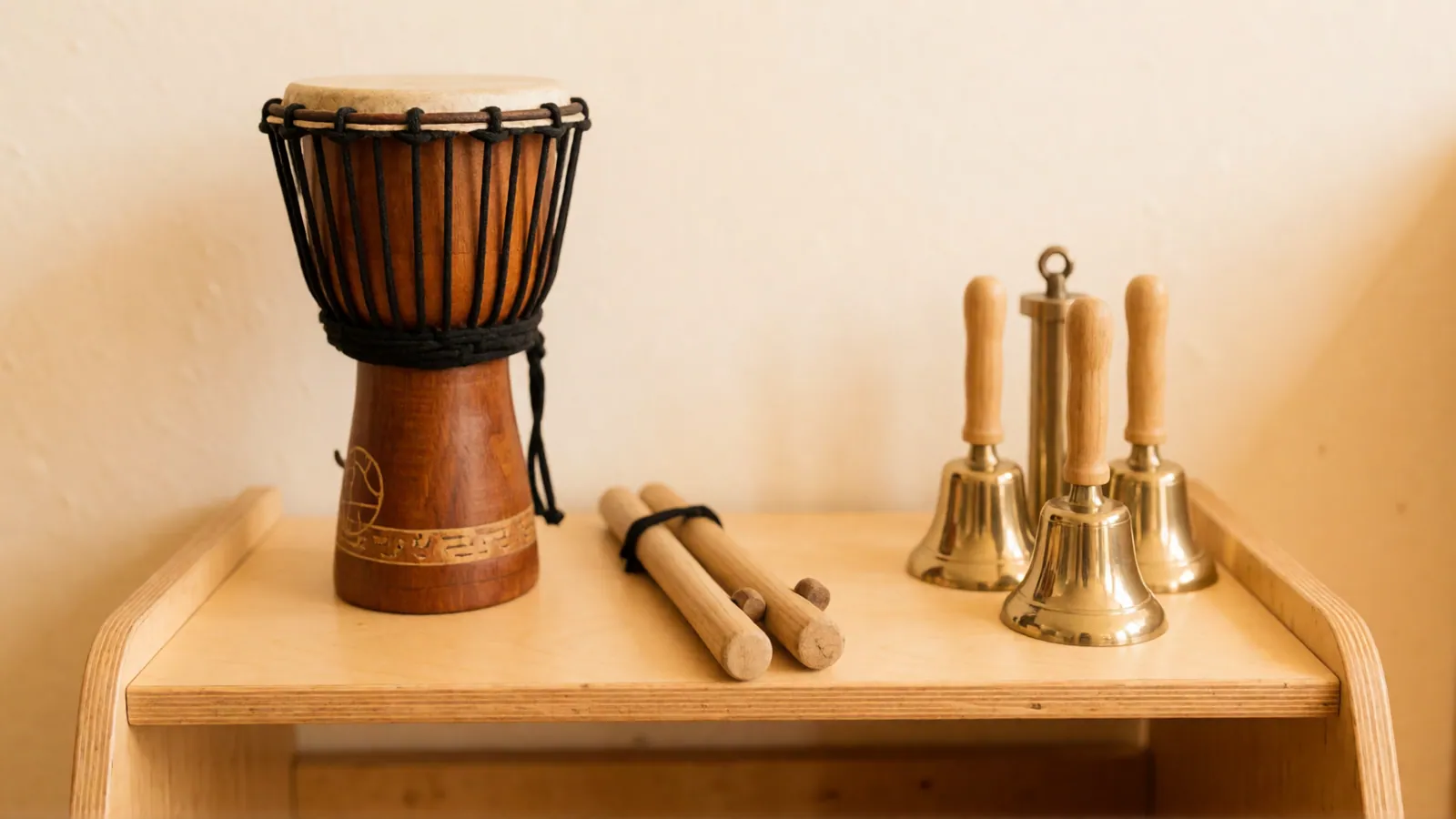
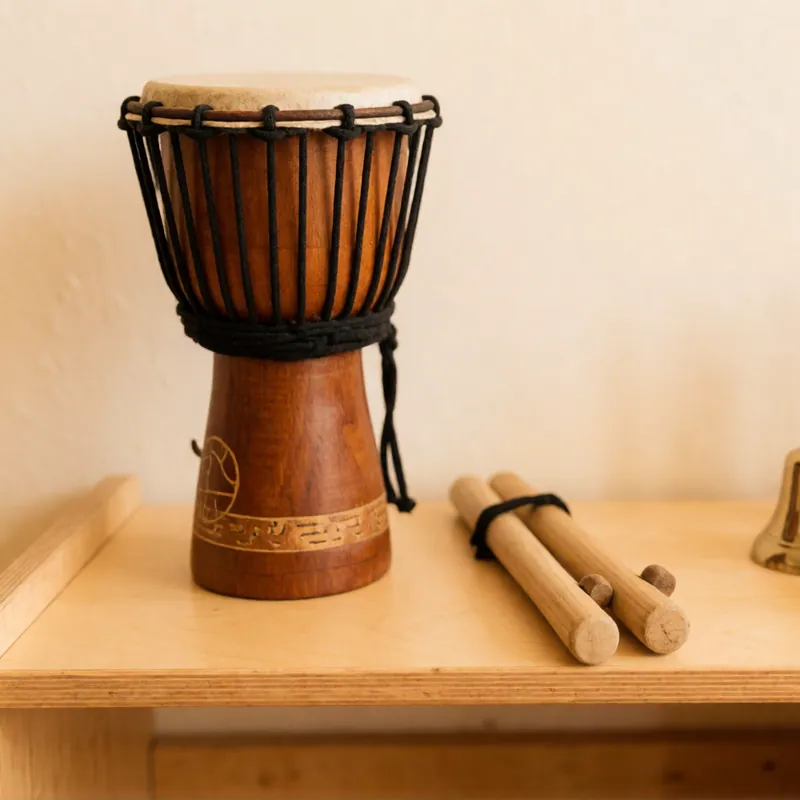
Real ones, mostly percussion, kept where children can reach them rather than in a cupboard brought out for a session. Drums, claves, bells, shakers, and a few things that are properly made rather than plastic.
The point of reachable instruments is that a child can choose one at eleven o'clock on a Tuesday because they have an idea, which is a completely different act from being handed one during music time.
They are loud. That is a genuine cost to the adults in the room and it is a cost we accept rather than manage away by locking the cupboard.
Movement, which is not a separate subject
Dancing, marching, stopping, spinning, moving like something, and the games where the whole room has to stop at once — which is impulse control practised as a game rather than demanded as behaviour.
Most of the physical development happens outside, twice a day, and has its own page. What happens indoors is the part about rhythm and about a room moving together.
On the days weather keeps everybody in, movement is what stops an indoor day from becoming unbearable. Those days are the reason we take it seriously rather than treating it as a nice extra.
Things we do not do, including one we are not permitted to. We do not offer night care, and could not — it requires its own separate Health Code permit which we do not hold. We do not take sick children, we do not collect from schools, we do not run a minibus, we do not employ a speech therapist or an occupational therapist, we do not tutor, and we do not offer a premium curriculum tier because there is only one curriculum here. Where you need one of those, we will tell you what it is actually called and where in this borough to look for it.
Included as standard
What is included
Singing every day, in every room
Several times a day in the younger rooms, where it is also how transitions are managed.
Instruments kept within reach
Percussion, properly made, available at eleven on a Tuesday rather than during a session.
Led by the staff who work here
Not a franchise, not a visitor, and not somebody your child sees for forty minutes a week.
No separate invoice
Included in the weekly fee. An external provider billing you $18 a week is a margin rather than a curriculum.
Movement games with a stop in them
Impulse control practised as a game rather than demanded as behaviour.
Songs in the languages of the room
Five are spoken by staff here, and children learn each other's.
A tolerance for noise
Reachable instruments are loud. That is a cost we accept rather than manage away with a cupboard.
Indoor movement on bad-weather days
Which is what stops a day indoors from becoming unbearable for everybody.
When to make an appointment
Signs this is worth an assessment
- You want music to be daily and ordinary rather than weekly and special.
- You do not want a separate invoice for something delivered by a visitor.
- You would like your child to reach for an instrument because they had an idea.
- You want songs in more than one language.
- You value adults who sing badly and often in front of children.
- You want indoor movement taken seriously for the days nobody can go out.
Music & movement — what it costs
- No external enrichment provider and no extra invoice. Where a nursery charges $18 a week for a music class delivered by somebody who visits on Tuesdays, that is a margin, not a curriculum.Included
Every rate on this site is published in full on the tuition page, including the ones that make us look expensive. Meals, snacks, nappy changing, settling-in sessions and the whole curriculum are inside the weekly fee — there is no premium tier and no outside provider invoicing you separately for a music class. The two charges that are not in the weekly fee are registration, at $75 a year per family rather than per child, and late collection after 6:15pm at $1 a minute, which goes to the two members of staff who stayed. If your child is three or four, read the 3-K page before you read this one.
Questions we are actually asked
Music & movement — frequently asked
Is music an extra?
No. It is included, it happens every day in every room, and it is led by the staff who work here. A franchise visiting for forty minutes a week and an $18 line on your invoice is a margin dressed as enrichment, and we would rather not.
Do you have real instruments?
Yes, mostly percussion, properly made, and kept where children can reach them rather than in a cupboard. That matters: choosing an instrument at eleven on a Tuesday because you had an idea is a different act from being handed one during music time.
Isn't it just noise?
Frequently, and that is a real cost to the adults in the room which we accept rather than manage away. Singing is also the most effective tool we have for moving twelve two-year-olds from chaos to calm, so the noise buys something.
What about children who do not want to join in?
They do not have to, and nobody is made to perform. A child sitting at the edge listening is participating, and the ones who watch for six months and then join are entirely ordinary.
Do you do performances for parents?
No. A nursery show is largely for the adults, it costs weeks of rehearsal that the children did not choose, and it turns something ordinary and daily into a thing with a right way to do it.
Related programmes
Families who read this also read
Play-based learning
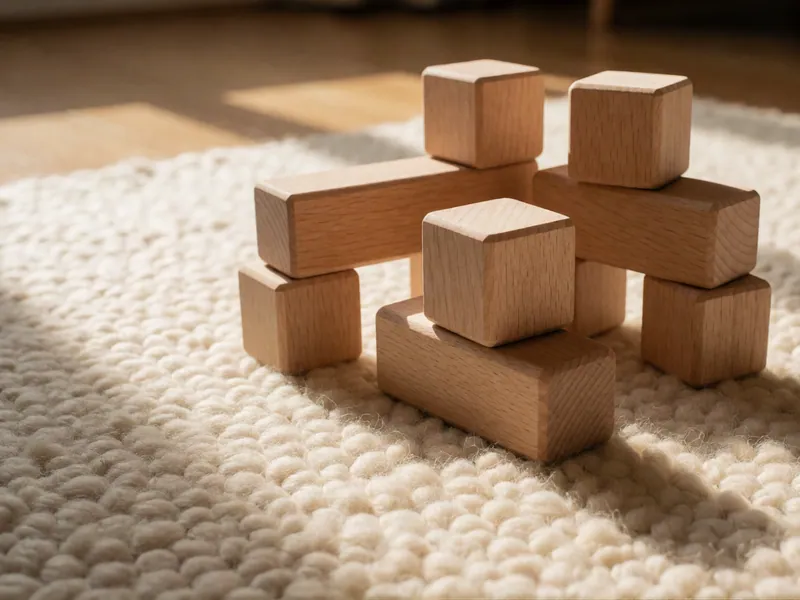
The approach with the best evidence behind it for children under five, and the one that photographs worst. We chose it anyway.
Included
Art & messy play
Paint, clay, water, sand and glue. Your child will come home dirty, and a nursery where they do not is a nursery where something has been cancelled.
Included
Dual-language
Five languages are spoken by staff here. Your child keeping their home language is not an obstacle to English, and the evidence is clear about that.
Included
Outdoor play
Twice a day in almost all weather, in our own enclosed yard. The published exceptions are heat, ice, thunder and air quality.
IncludedTuesday and Thursday mornings, while the children are here
Come and see the room
A tour here happens during a session, in the room your child would actually be in, at the time of day they would be in it. You meet the person who leads that room rather than only the director, and you see the noise and the mess that are genuinely there. It takes an hour. If your child is three or four we will ask whether you have applied for free 3-K or Pre-K for All before we quote you a rate, because a good many families should not be paying us at all.