What the day contains
Dual-language support
English, Spanish, Tagalog, Bengali and Nepali are spoken by staff here. Your child keeping their home language is not an obstacle to English, and the evidence on that is not ambiguous.
Woodside is one of the most linguistically diverse half-square-miles in the United States, and a nursery here that operated as though every family arrived speaking English at home would be describing a neighbourhood that does not exist.
The thing families most often arrive worried about is whether keeping a home language will hold their child back in English. It will not, and the anxiety is usually installed by somebody well-meaning who was wrong.
What we tell families who are worried
That a strong home language is a foundation rather than a competitor. Children who are secure in the language spoken at home do not arrive at English later or more slowly for having it, and dropping the home language costs a child their fluency with their own grandparents to solve a problem that was not there.
That a period of quiet is normal. A child who has been immersed in a new language will often say very little in it for months while they take it in, and that silent stretch is frequently mistaken for a delay. We will tell you when we think that is what we are looking at, and we will tell you when we think it is something else.
And that mixing languages in one sentence is not confusion. It is an ordinary feature of growing up bilingual, it resolves, and treating it as an error teaches a child to be careful about speaking at all.
What we actually do in the room
Match a new child to a room with an adult who shares their home language where we can. That is a genuine comfort in the first fortnight, and it is the single most useful thing available to a two-year-old who has just been left somewhere unfamiliar.
Where we cannot, we say so plainly rather than implying we did. Five languages is a good number and it is not all of them — this neighbourhood speaks dozens, and a nursery claiming to accommodate every family's language would be claiming something no centre this size can do.
Songs, counting, greetings and stories in the languages of the room, learned by everybody. Children pick up each other's languages readily and it changes how a room treats difference.
Talking to families, which is the other half
Sunita interprets at enrolment meetings and reviews where she can, and sits in on the paperwork conversations — which is where a language barrier does the most damage, because a family who cannot follow a form gives up on a voucher application rather than on a nursery.
Written notes home go in English. We will talk you through anything, at the door or on the telephone, and we would rather do that than send home a translation nobody checked.
If a conversation matters and we cannot hold it properly, we will find somebody rather than proceeding on a guess. Getting a medical or safeguarding conversation approximately right is not good enough.
What this is not
This is not a bilingual immersion programme and we should not be described as one. Those are structured, they teach a curriculum in two languages by design, and they are a different product.
What we offer is a room where a child's home language is present, valued and used, and where the adults understand what bilingual development actually looks like. That is more modest and it is true.
Every check is cleared before anybody is alone with a child. Every adult who works in this building has cleared a criminal history check, a search of the Statewide Central Register of Child Abuse and Maltreatment, and a check against the Justice Center Staff Exclusion List. All of it is completed and cleared before that person has unsupervised contact with any child — there is no grace period in the law and there is no provisional start here. Every member of staff is also a mandated reporter, which means that where we suspect a child is being harmed we are required to report it, including where the person we suspect is a parent.
Included as standard
What is included
Five languages spoken by staff
English, Spanish, Tagalog, Bengali and Nepali.
Matched to a shared-language room where possible
The most useful thing available to a two-year-old in their first fortnight.
A plain answer when we cannot match
This neighbourhood speaks dozens of languages and we have five. We will not imply otherwise.
Songs, counting and stories in the room's languages
Learned by everybody, which changes how a room treats difference.
Interpreting at enrolment and reviews
Sunita sits in, especially on the paperwork conversations where a barrier does the most damage.
Someone found for conversations that matter
A medical or safeguarding conversation held approximately is not good enough.
An explanation of the silent period
Months of taking in a new language is normal and is frequently mistaken for a delay.
No claim to be an immersion programme
We are not one. What we are is more modest and it is true.
When to make an appointment
Signs this is worth an assessment
- Your family speaks a language other than English at home.
- Somebody has told you that keeping it will hold your child back.
- You want an adult in the room who can comfort your child in their own language.
- You need help following the 3-K or voucher paperwork.
- You want to be told plainly if we cannot match your language rather than reassured vaguely.
- You want your child to hear other children's languages as ordinary.
Dual-language — what it costs
- English, Spanish, Tagalog, Bengali and Nepali. We match a new child to a room with a shared language where we can, and we say so plainly when we cannot rather than implying we did.Included
Every rate on this site is published in full on the tuition page, including the ones that make us look expensive. Meals, snacks, nappy changing, settling-in sessions and the whole curriculum are inside the weekly fee — there is no premium tier and no outside provider invoicing you separately for a music class. The two charges that are not in the weekly fee are registration, at $75 a year per family rather than per child, and late collection after 6:15pm at $1 a minute, which goes to the two members of staff who stayed. If your child is three or four, read the 3-K page before you read this one.
Questions we are actually asked
Dual-language — frequently asked
Will speaking another language at home hold my child back in English?
No. A strong home language is a foundation rather than a competitor, and dropping it costs your child fluency with their own family to solve a problem that was not there. This is the anxiety families most often arrive with and it is usually installed by somebody well-meaning who was wrong.
My child has stopped speaking since starting. Should I worry?
A silent period after immersion in a new language is normal and can last months while a child takes it in. It is frequently mistaken for a delay. We will tell you when we think that is what we are seeing, and equally we will tell you when we think it is something else worth looking at.
Do you have staff who speak my language?
Five are spoken here — English, Spanish, Tagalog, Bengali and Nepali. This neighbourhood speaks many more than that, so the honest answer for some families is no, and we will say so rather than implying we can match you.
Is my child mixing languages a problem?
No. Mixing within a sentence is an ordinary feature of bilingual development, it resolves on its own, and treating it as an error mainly teaches a child to be cautious about speaking at all.
Are you a bilingual immersion programme?
No, and we should not be described as one. Immersion programmes are structured and teach a curriculum in two languages by design. What we offer is a room where a home language is present, used and valued, by adults who understand what bilingual development looks like.
Related programmes
Families who read this also read

Early literacy
Talking, singing, rhyming and being read to. Not worksheets, and not flashcards, and we will explain why at the tour.
Included
Social & emotional
Sharing, waiting, losing, apologising and calming down. The hardest curriculum in the building and the one that predicts school the best.
Included
Observation & referral
We watch, we write it down, and where something concerns us we tell you early and point you at Early Intervention. We do not diagnose.
Included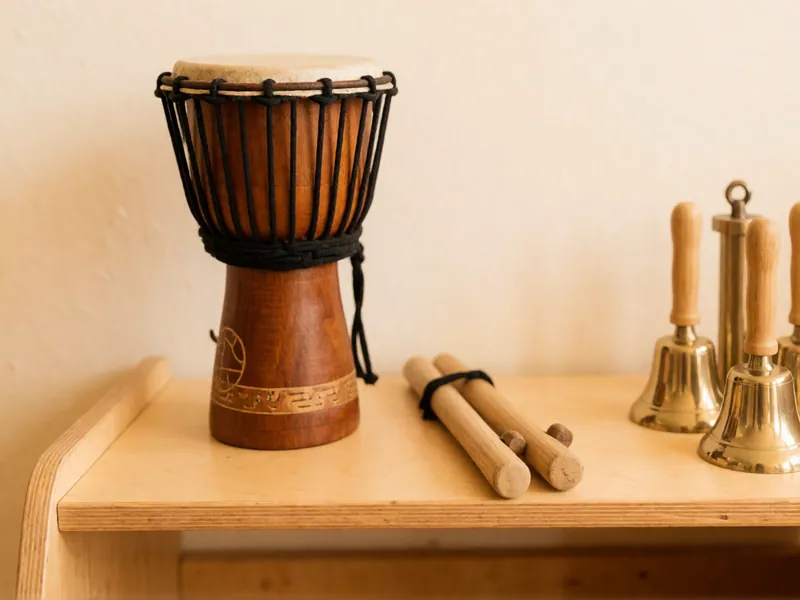
Music & movement
Singing every day, instruments most days, and dancing whenever the room needs to move. Led by our own staff, not a visiting franchise.
IncludedTuesday and Thursday mornings, while the children are here
Come and see the room
A tour here happens during a session, in the room your child would actually be in, at the time of day they would be in it. You meet the person who leads that room rather than only the director, and you see the noise and the mess that are genuinely there. It takes an hour. If your child is three or four we will ask whether you have applied for free 3-K or Pre-K for All before we quote you a rate, because a good many families should not be paying us at all.