Care by age
Infant care, six weeks to eighteen months
The most expensive room in this building and the one where the price is the least negotiable, because what you are buying is a quarter of an adult's working day.
Leaving a baby is the hardest thing most families do in their first year, and no amount of good design in a room makes that morning easy. What a nursery can do is make the day afterwards genuinely good, and be honest with you about what it looks like.
The infant room here takes children from six weeks to around eighteen months. It runs to the New York City ratio of one adult to four infants in a group of no more than eight, and Rosa has led it since the year after we opened, which is unusual enough in this trade to be worth saying plainly.
What the ratio actually buys
One adult to four babies is the legal floor under Article 47 for infants from birth to eleven months, with a maximum group size of eight. It is not a feature we chose and we would be misleading you to present it as one.
What it means in practice is that for roughly a quarter of the working day, an adult's attention is available to your child. That sounds meagre written down and it is the difference between a baby who is held when they need holding and a baby who is efficiently managed. Everything else about an infant room is downstream of this number.
It is also the entire explanation of the price. At $475 a week you are paying a quarter of a qualified person's wage, plus the room, the food and the rest. Infant care is expensive everywhere in this city for arithmetic reasons rather than because somebody is being greedy, and a centre charging noticeably less is worth asking a direct question about.
The routine belongs to the baby
We write down what you already do at home — feeds, naps, the order things happen in, what settles them — and we keep doing it here rather than replacing it with a nursery timetable. A baby of four months does not adapt to an institution's schedule, they simply have a worse day.
That means bottles when they are hungry rather than at fixed times, and sleep when they are tired rather than at eleven. Rosa will tell you honestly when something is genuinely not working — a baby who cannot settle here at all, or a feeding pattern that has drifted — but the default is that home sets the pattern and we follow it.
Expressed milk and formula are both entirely ordinary here, and neither gets a comment. Milk is labelled, dated, stored properly and never shared between children.
Safe sleep, without exceptions
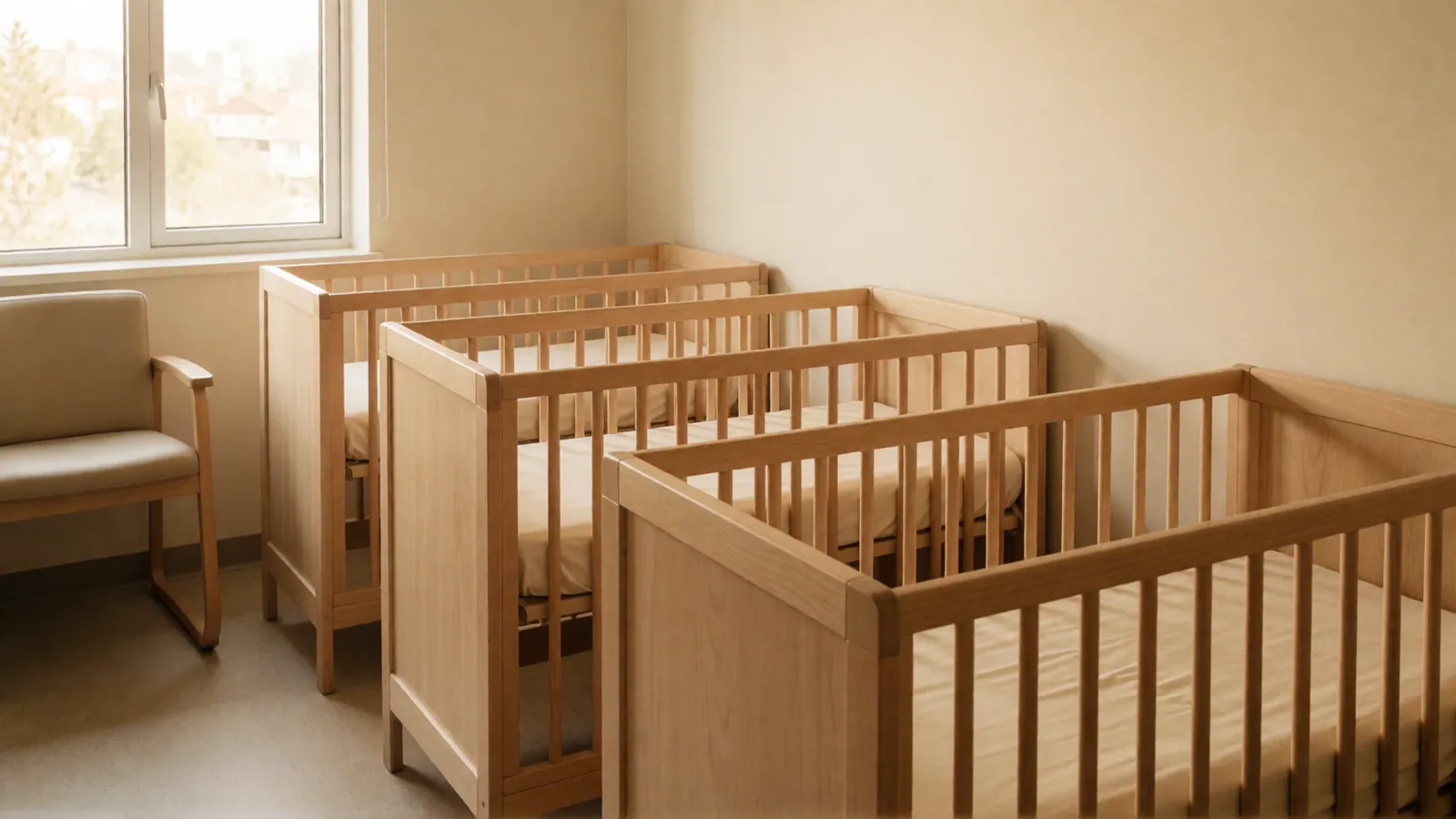
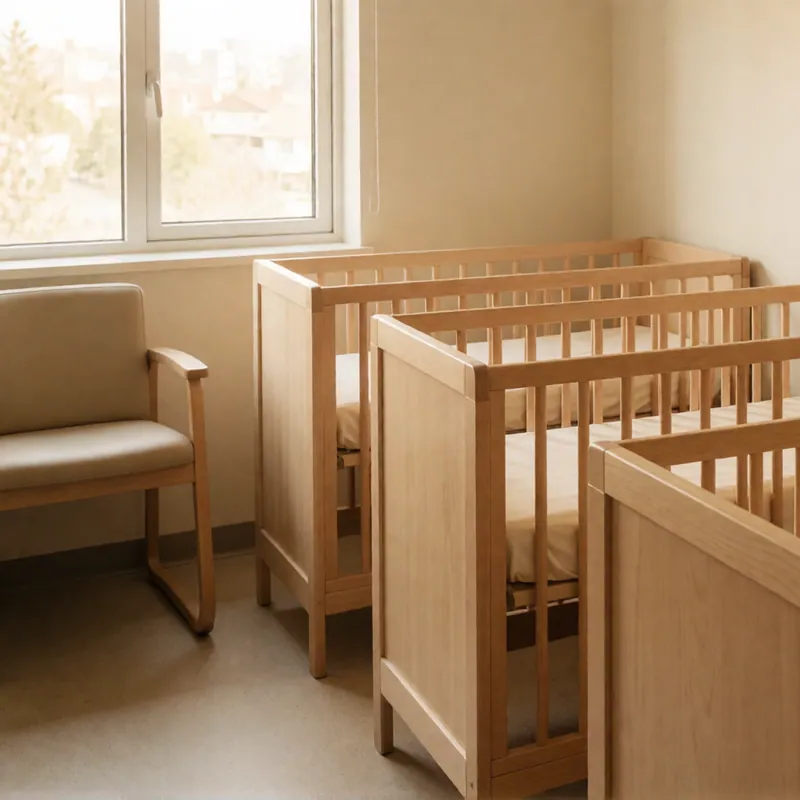
Babies sleep on their backs, on a firm flat surface, in a cot with nothing else in it. No bumper pads, no toys, no pillows, no heavy blankets and no infant positioners unless a physician has prescribed one in writing.
Car seats are not sleep surfaces and a baby who arrives asleep in one is moved to a cot. This is occasionally unwelcome — nobody enjoys waking a sleeping baby — and it is not a thing we negotiate.
Cots are assigned to one child, stored individually and washed on a posted rota. They are not shared between children on different days, which is a thing worth asking about anywhere you visit.
What a day actually contains
Not very much, deliberately. Floor time, being carried, being talked to, one or two things put in front of them, outside in the yard or the buggy twice a day in most weather, and a great deal of sleep. An infant room that looks busy is usually one that has confused adults' comfort with babies' needs.
Talk is the one thing we do relentlessly. Narrating what is happening, naming things, responding to sounds as though they were conversation. It is the single strongest thing an early-years setting contributes at this age and it costs nothing but attention.
You get a written note at the end of every day: sleep, feeds, nappies, mood, and one specific thing that happened. The awkward parts are in it. If your baby was unsettled for an hour, that is in the note on the day rather than mentioned in passing on Friday.
Settling in, and how long it really takes
Two weeks is normal here and three is not unusual. Short sessions with you in the building first, then short sessions without you, then a full day. We do not charge for settling sessions.
We will not tell you a distressed baby is fine. If your child is not coping we will say so, we will slow it down, and if it still is not working after a fair attempt we will say that too — including when the honest answer is that six weeks is early for your particular baby and a few more weeks at home would serve them better.
The waiting list for this room is genuinely long, usually nine to fourteen months, because eight places turn over roughly once a year each. If you are expecting, this is the room to enquire about early, and our waiting list page explains why a position number tells you less than you think.
The ratios are a legal floor, not a boast. The Article 47 ratios that govern this building are one educator to four infants aged birth to eleven months in a group of at most eight; one to five for toddlers of twelve to twenty-four months in a group of at most ten; and one to six for two- to under-three-year-olds in a group of at most twelve. Staff counted in a ratio must maintain direct line of sight and constant competent supervision at all times, and a group of two- to five-year-olds must be in the charge of a qualified group teacher. Those are floors rather than achievements, and a centre quoting you a better number should be asked how it is funded.
Included as standard
What is included
The legal ratio, held all day
One educator to four infants in a group of no more than eight, maintained through lunch, through the start of nap and through the last hour of the day.
Formula, expressed milk or both
Stored, labelled, dated and never shared. Neither choice attracts a comment and neither costs extra.
Weaning food from around six months
Cooked in our kitchen, following your lead on timing and what you have already introduced at home.
Nappies changed and recorded
Changing is included in the fee; nappies and wipes come from home. Every change goes in the daily note.
A cot assigned to your child
Stored individually, washed on a posted rota, never shared between children.
A written note every day
Sleep, feeds, nappies, mood and one specific thing that happened, from the adult who was in the room.
Two weeks of settling, unbilled
Short sessions building to full days, at your baby's pace rather than to a schedule.
Outside twice a day
In the yard or the buggy, in almost all weather. The published exceptions are heat, ice, thunder and air quality.
When to make an appointment
Signs this is worth an assessment
- You are returning to work and need a place from a specific month rather than eventually.
- You want the same two adults every day rather than whoever is on shift.
- You would rather be told your baby had a hard morning than shown a photograph of a good minute.
- You need somewhere open early enough that the commute works without a sprint.
- You are expecting, and would rather join a waiting list nine months early than three weeks late.
- You want to know what the ratio is and what it is held to, and to be told the same number by everybody you ask.
Infant care — what it costs
- Full-time, five days, 7:00am to 6:15pm. Infant care costs more than every other room here for one reason: the law allows one adult to four babies, so you are buying a quarter of a person's working day.$475 / week
Every rate on this site is published in full on the tuition page, including the ones that make us look expensive. Meals, snacks, nappy changing, settling-in sessions and the whole curriculum are inside the weekly fee — there is no premium tier and no outside provider invoicing you separately for a music class. The two charges that are not in the weekly fee are registration, at $75 a year per family rather than per child, and late collection after 6:15pm at $1 a minute, which goes to the two members of staff who stayed. If your child is three or four, read the 3-K page before you read this one.
Questions we are actually asked
Infant care — frequently asked
How early will you take a baby?
Six weeks. That is the youngest we take and it is early — a fair number of families who enquire at six weeks end up starting at four or five months, and we would rather help you think about that honestly than fill a place.
What is the ratio in the infant room?
One educator to four infants, in a group of no more than eight. That is the New York City Article 47 rule for infants from birth to eleven months and it is a legal floor rather than something we chose. It holds through lunch, nap and the last hour of the day.
Why does infant care cost more than the other rooms?
Because the ratio is tighter. At one adult to four babies you are buying a quarter of a qualified person's working day, against a sixth in the twos room. The whole of the price difference between our rooms is that arithmetic.
Can I send expressed milk?
Yes, and it is completely ordinary here. It is labelled, dated, stored properly and never shared between children. Formula is equally ordinary and neither choice attracts a comment from anybody.
How long is the wait for a place?
Usually nine to fourteen months, which is the honest range rather than the encouraging end of it. Eight places turning over roughly once a year each is not a lot of movement, and the ratio means we cannot simply add more.
Related programmes
Families who read this also read
Toddler care
Walking changes everything about a room: the furniture, the floor, the ratio and the amount of the day spent outdoors.
$425 / week
Naps & rest
Every child gets a cot, a rest period and permission not to sleep. Infants sleep on their backs, on a firm flat surface, with nothing else in the cot.
Included
Meals
Breakfast, a cooked lunch and two snacks, made in the kitchen here. The week's menu is posted, and it is the menu we actually cook.
Included
Hourly & drop-in
Genuinely hourly, genuinely bookable, and genuinely limited — because our permit caps how many children may be in the building at once.
$28 / hourTuesday and Thursday mornings, while the children are here
Come and see the room
A tour here happens during a session, in the room your child would actually be in, at the time of day they would be in it. You meet the person who leads that room rather than only the director, and you see the noise and the mess that are genuinely there. It takes an hour. If your child is three or four we will ask whether you have applied for free 3-K or Pre-K for All before we quote you a rate, because a good many families should not be paying us at all.