What the day contains
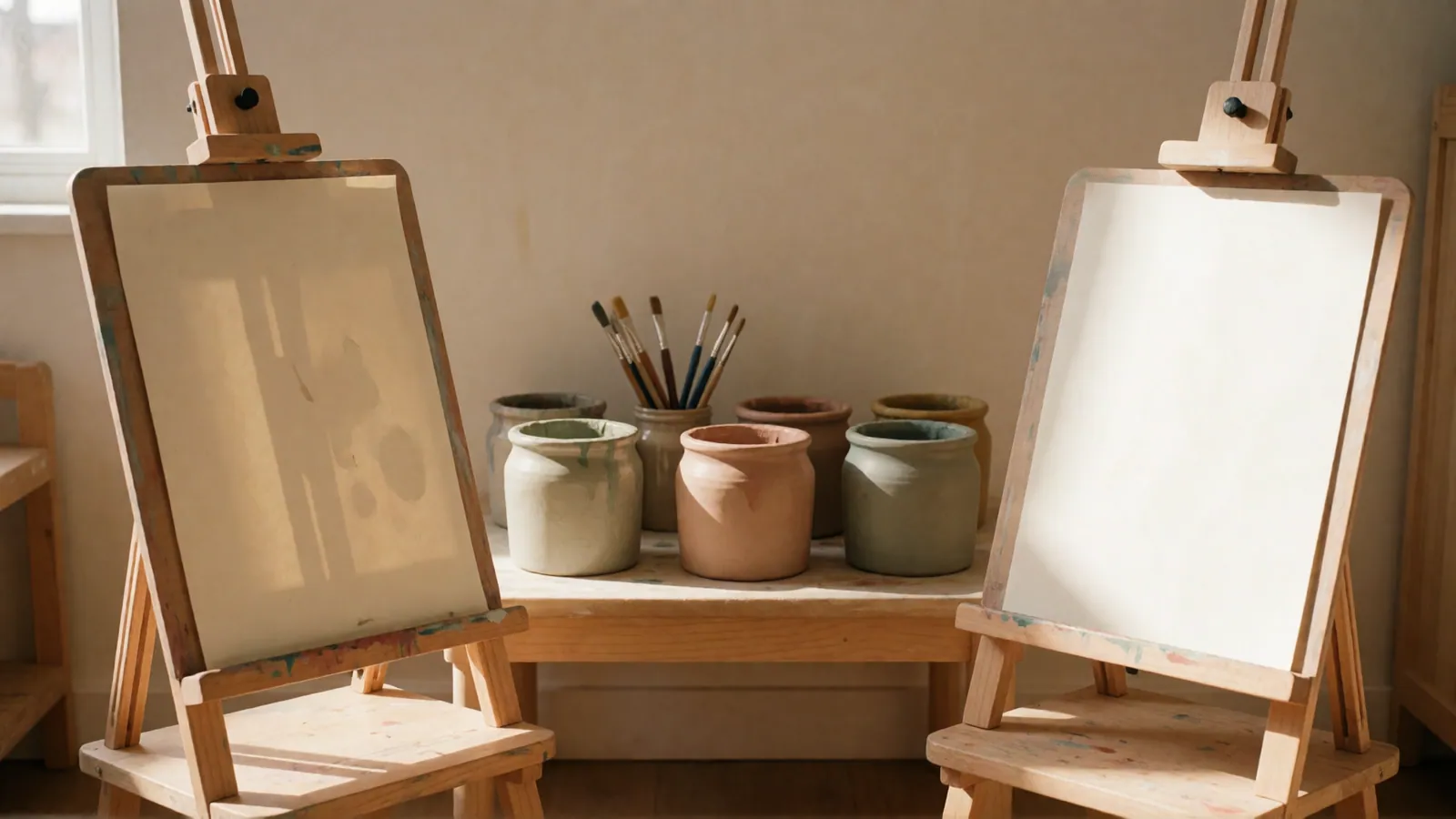
Art and messy play
Your child will come home dirty. A nursery where they consistently do not is a nursery where something has quietly been cancelled for the convenience of the adults.
Messy play is the first thing to go when a setting starts optimising for how things look. It is genuinely inconvenient: it takes setting up, it takes clearing away, it ruins clothes, and it generates complaints from a minority of families.
It is also where a great deal of the sensory, physical and expressive work of the early years happens, and a room where the paint comes out on Fridays under supervision is a room that has decided in favour of the adults.
Process rather than product
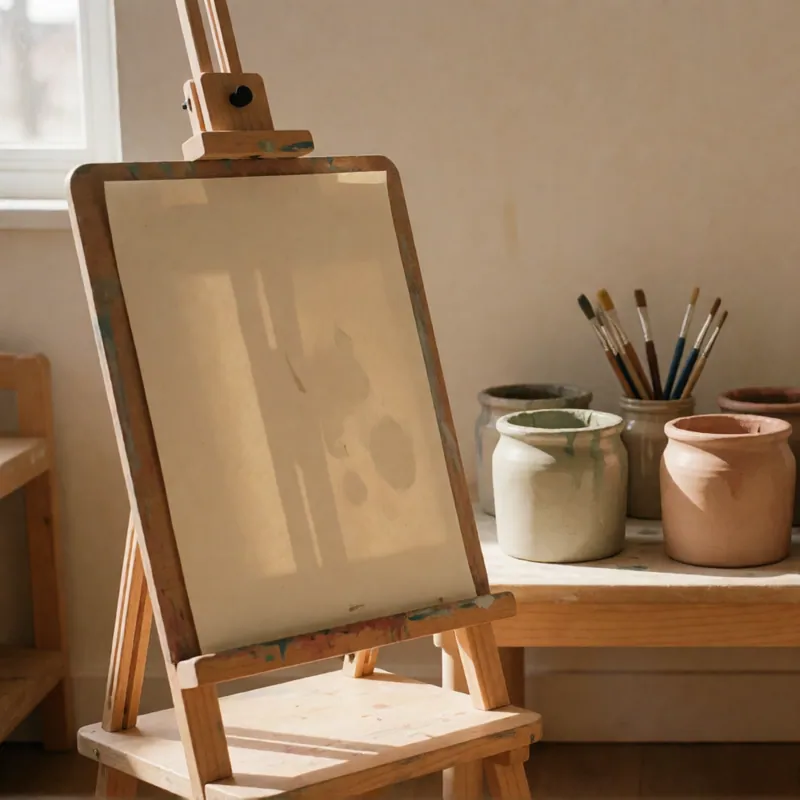
What matters is what happens while a child is doing it, not what is left afterwards. A three-year-old who mixes every colour into brown has done something more interesting than one who produced a recognisable house, and only one of those photographs well.
Which is why you will sometimes get brown paper home, and why you will not get twenty identical handprint reindeer in December. An adult-directed craft where every child produces the same object is decoration for a corridor rather than art by a child.
You will also sometimes get nothing home, because the thing was made of sand, or was a spillage a child studied for ten minutes, or got taken apart by its maker. That is not a bad day.
What is available, and how often
Paint, clay, dough, glue, chalk, collage materials, water and sand, available daily rather than on a rota. The materials are set out at the start of the day and stay out.
Mud and water in the yard, which is where the biggest and best mess happens and where it is least trouble to clean up. In practice a good proportion of the messy play here is outdoors for exactly that reason.
Real tools where they are safe: proper brushes, scissors that cut, clay tools. Blunt scissors that do not cut teach a child that they are bad at scissors.
Clothes, and the thing we actually mean
Aprons are provided and they are not sufficient, because an apron protects a torso and a three-year-old paints with their forearms. Send them in clothes you genuinely do not mind losing, and we mean it rather than saying it politely.
We keep spare clothes for every child, and we would rather use them than keep a child out of something. If your child has come home clean every day for a fortnight, ask us why, because the answer might be that they are avoiding it and that is worth knowing.
Everything is washable and none of it is permanent marker. This is a small point that families ask about far more often than we expected.
What comes home, and what does not
The work does, when there is work. What does not is a stream of photographs of your child making it — for reasons set out at length on a separate page, and which apply here more than anywhere, because the art table is where the temptation to photograph is strongest.
What you get instead is the thing itself, and a sentence about what they were doing while they made it. That sentence is worth more than the picture and is much harder to produce, which is why most settings send the picture.
There are no children in any photograph on this site. There is not a single child in any photograph on this website. Every image here shows our rooms, our materials, our food or our educators, and that is a decision rather than a gap in the budget. Marketing photographs of children are somebody else's children, used to sell a place to you; and a daily app photograph of a smiling child tells you about one second of a nine-hour day and nothing about the other thirty-two thousand. What we send home instead is a written note about sleep, food, mood and what actually happened, from the person who was in the room.
Included as standard
What is included
Paint, clay, glue and collage, daily
Set out at the start of the day and left out, rather than brought out on a rota.
Water, sand and mud in the yard
Where the biggest mess belongs and is least trouble to clear.
Aprons, and spare clothes for every child
The apron protects a torso; a three-year-old paints with their forearms.
Real tools
Brushes that hold paint and scissors that cut. Blunt scissors teach a child they are bad at scissors.
Process rather than product
Sometimes brown paper comes home. Sometimes nothing does, because it was made of sand.
No adult-directed identical crafts
Twenty matching handprint reindeer is corridor decoration rather than a child's work.
A sentence about what they were doing
Which is harder to produce than a photograph and worth considerably more.
Everything washable
A small point families ask about far more often than we expected.
When to make an appointment
Signs this is worth an assessment
- You are prepared for your child to come home genuinely dirty.
- You would rather have brown paper than a matching craft from a template.
- You want messy play available every day rather than on Fridays.
- You want real scissors and real brushes rather than safe ones that do not work.
- You would rather be told what your child was doing than shown a photograph of them doing it.
- You want to be told if your child has started avoiding the paint.
Art & messy play — what it costs
- Aprons provided, spare clothes kept for every child. We ask you to send them in clothes you do not mind losing, and we mean it rather than saying it politely.Included
Every rate on this site is published in full on the tuition page, including the ones that make us look expensive. Meals, snacks, nappy changing, settling-in sessions and the whole curriculum are inside the weekly fee — there is no premium tier and no outside provider invoicing you separately for a music class. The two charges that are not in the weekly fee are registration, at $75 a year per family rather than per child, and late collection after 6:15pm at $1 a minute, which goes to the two members of staff who stayed. If your child is three or four, read the 3-K page before you read this one.
Questions we are actually asked
Art & messy play — frequently asked
Will my child ruin their clothes?
Probably, and we would rather say so plainly. Aprons are provided and they protect a torso, which is not where a three-year-old paints. Send them in clothes you genuinely do not mind losing. We keep spares and would rather use them than keep a child out of something.
Why did my child bring home brown paper?
Because they mixed every colour, which is a more interesting thing to have done than producing a recognisable house. What matters is what happened while they were doing it, and only one of those two outcomes photographs well.
Do you do seasonal crafts?
Not the kind where twenty children produce the same object from a template. That is decoration for a corridor rather than work by a child, and it is made mostly by an adult holding a hand.
Will you send me photos of my child painting?
No, and there is a whole page on why. What you get is the work itself plus a sentence about what they were doing while they made it, which is harder to produce and worth considerably more than a photograph.
My child comes home clean every day. Is that normal?
It is worth asking us about. Some children genuinely dislike mess and that is fine and respected, but a fortnight of clean clothes can also mean a child is avoiding something, and that is a thing we would want to notice and tell you.
Related programmes
Families who read this also read
Play-based learning
The approach with the best evidence behind it for children under five, and the one that photographs worst. We chose it anyway.
Included
Outdoor play
Twice a day in almost all weather, in our own enclosed yard. The published exceptions are heat, ice, thunder and air quality.
Included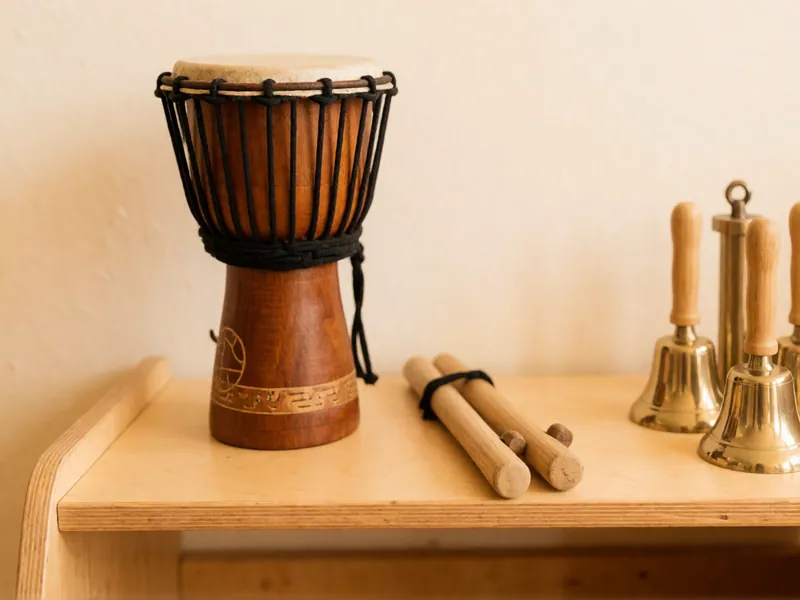
Music & movement
Singing every day, instruments most days, and dancing whenever the room needs to move. Led by our own staff, not a visiting franchise.
Included
Social & emotional
Sharing, waiting, losing, apologising and calming down. The hardest curriculum in the building and the one that predicts school the best.
IncludedTuesday and Thursday mornings, while the children are here
Come and see the room
A tour here happens during a session, in the room your child would actually be in, at the time of day they would be in it. You meet the person who leads that room rather than only the director, and you see the noise and the mess that are genuinely there. It takes an hour. If your child is three or four we will ask whether you have applied for free 3-K or Pre-K for All before we quote you a rate, because a good many families should not be paying us at all.