
Two weeks, and we do not charge for them
The first day, and the fortnight around it
Settling in is two weeks of short sessions building to a full day. It is unbilled, it is at your child’s pace, and this page describes what it is actually like rather than what it ought to be like.
How the fortnight is shaped
Two short sessions with you in the building, where you are in the room and then in the corridor. Then short sessions without you — an hour, then two, then a morning. Then a morning with lunch. Then a full day. Two weeks is normal, three is not unusual, and a child who needs longer gets longer.
None of it is charged for. Your weekly fee starts when your child starts full days, because charging a family to find out whether their child can cope would be a strange way to begin.
What the first morning is usually like
Frequently fine, and then difficult on day four. Children very often manage the novelty and then discover, once it stops being novel, that this is a thing that is going to keep happening. Day four and the start of the second week are the hard points far more often than the first morning is.
Some children cry at the door for a fortnight and are entirely happy ninety seconds later. Some are cheerful at the door and quietly flat all day, which is harder to spot and worse. We will tell you which of those we are seeing, honestly, and we will not describe a distressed child as having settled well.
The goodbye
Short, warm, and actually a goodbye. The single most common thing that makes settling harder is a parent who leaves without saying so, because a child who looks up and finds you gone learns to watch the door instead of playing.
Say you are going, say when you are coming back in terms they understand — after lunch, after the garden — and go. Then telephone us from the end of the street, as often as you like. We would much rather take the call than have you standing outside.
What to send
Spare clothes, more than you think, in a bag that is not precious. Nappies and wipes if they are in them. A comfort object if they have one — it lives in their cubby and comes out whenever it is wanted. Sun cream and a hat in summer. And clothes you genuinely do not mind losing, because the paint comes out every day and the aprons only cover a torso.
The first month
What we will tell you, and when
A written note every day
Sleep, food, mood, nappies or toilet, and one specific thing that happened. From the adult who was in the room.
A call whenever you want one
During the settling fortnight especially. Ring as often as you like — we would rather that than have you worrying at a desk.
The difficult parts, on the day
If they did not eat, could not settle, or had a hard time with another child, you hear it that afternoon rather than on Friday.
A slower pace if it is needed
Three weeks instead of two, or a step back to mornings. We will suggest it rather than push through.
A proper review at four weeks
Sleep, food, language, friendships, and whether the days you chose are the right ones. A conversation, not a form.
An honest answer if it is not working
Including when the answer is that this is not the right setting. Four weeks is early enough to do something about it.
When we will ring you and ask you to come. We will ask you to collect your child at a temperature of 100.4 degrees or above, for vomiting or diarrhoea, for an undiagnosed rash, or when they are simply too unwell to take part in the day. There is no sick room here and we do not have staff to sit with one child away from a group. We publish the thresholds so the decision is not a negotiation at two in the afternoon — and because a nursery willing to bend them for you is a nursery that bent them for the family whose child infected yours.
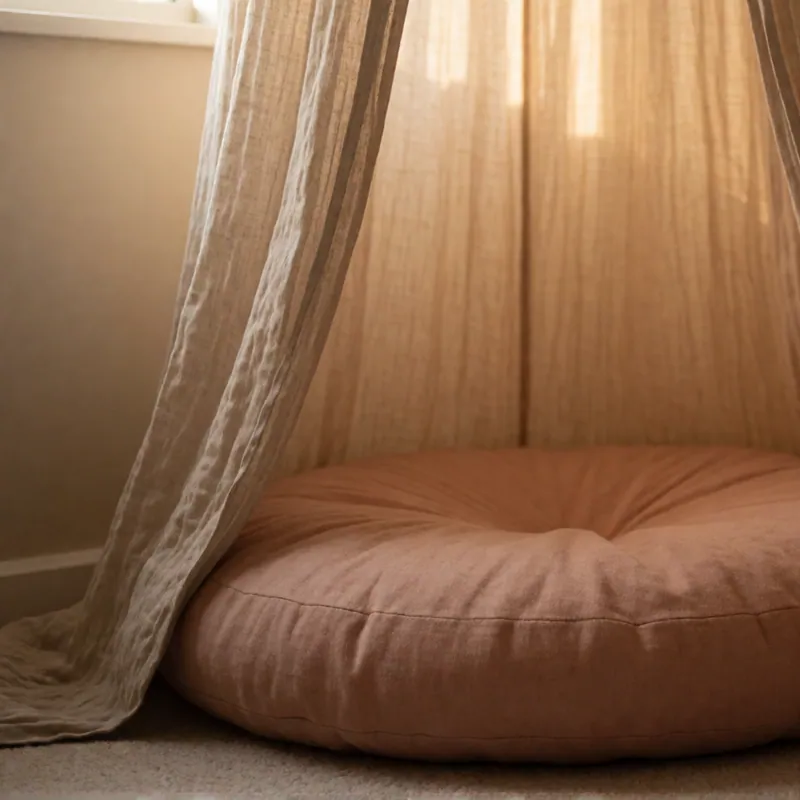
There are no children in any photograph on this site. There is not a single child in any photograph on this website. Every image here shows our rooms, our materials, our food or our educators, and that is a decision rather than a gap in the budget. Marketing photographs of children are somebody else's children, used to sell a place to you; and a daily app photograph of a smiling child tells you about one second of a nine-hour day and nothing about the other thirty-two thousand. What we send home instead is a written note about sleep, food, mood and what actually happened, from the person who was in the room.
Tuesday and Thursday mornings, while the children are here
Come and see the room
A tour here happens during a session, in the room your child would actually be in, at the time of day they would be in it. You meet the person who leads that room rather than only the director, and you see the noise and the mess that are genuinely there. It takes an hour. If your child is three or four we will ask whether you have applied for free 3-K or Pre-K for All before we quote you a rate, because a good many families should not be paying us at all.