What the day contains
Early math and science play
Sorting, pouring, weighing, counting out loud and finding out what sinks. Mathematics before anybody calls it that, which is when most of it is actually learned.
Almost all of the mathematics a child needs before five is physical. It is about quantity, comparison, sequence, space and pattern, and it is learned by moving objects around rather than by looking at symbols that stand for them.
A three-year-old who has spent a year filling and emptying containers has a better foundation for volume than one who can count to twenty by rote, and the second is much easier to demonstrate to a visiting parent. That tension is worth naming.
What is actually on the tables
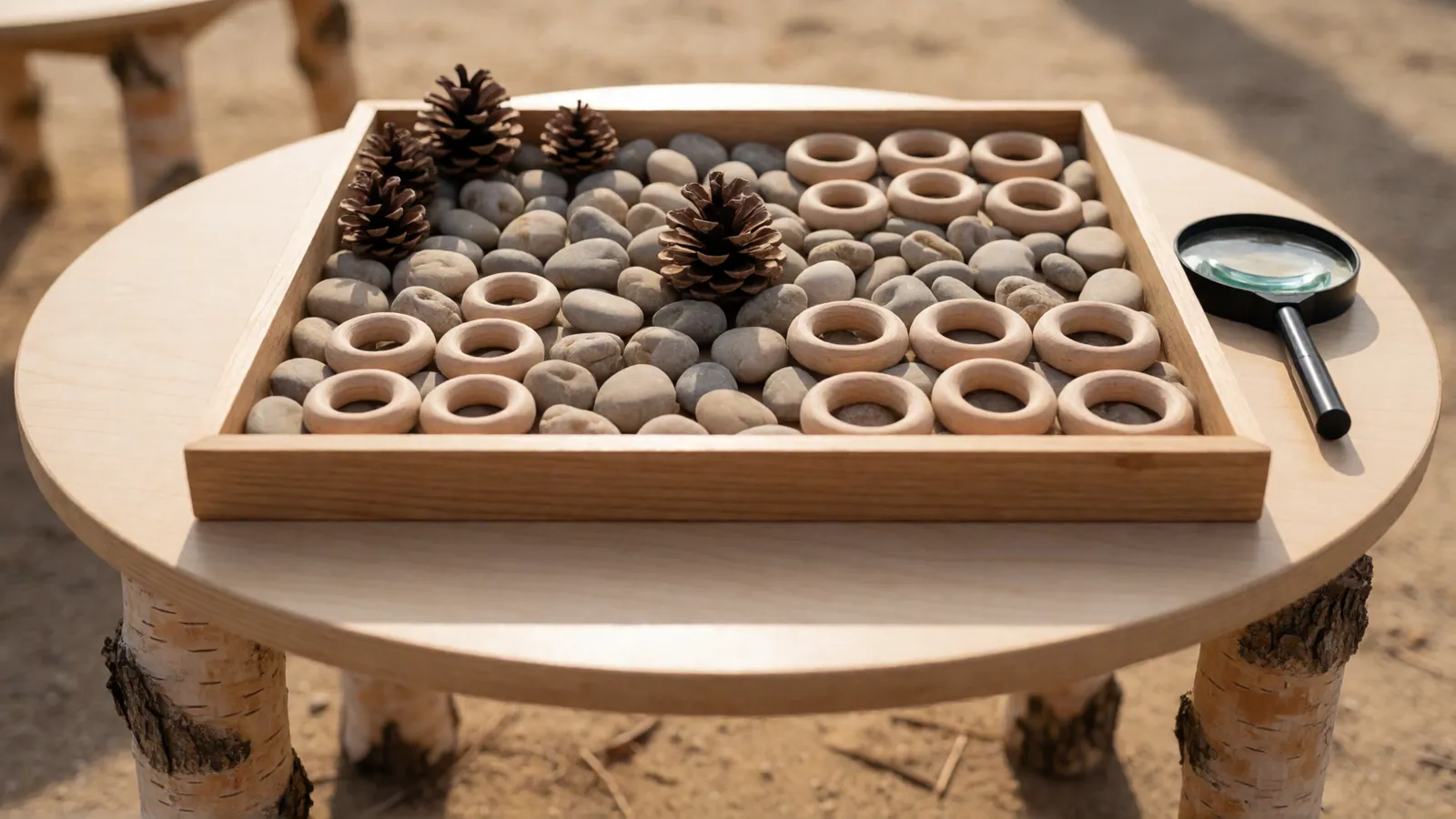
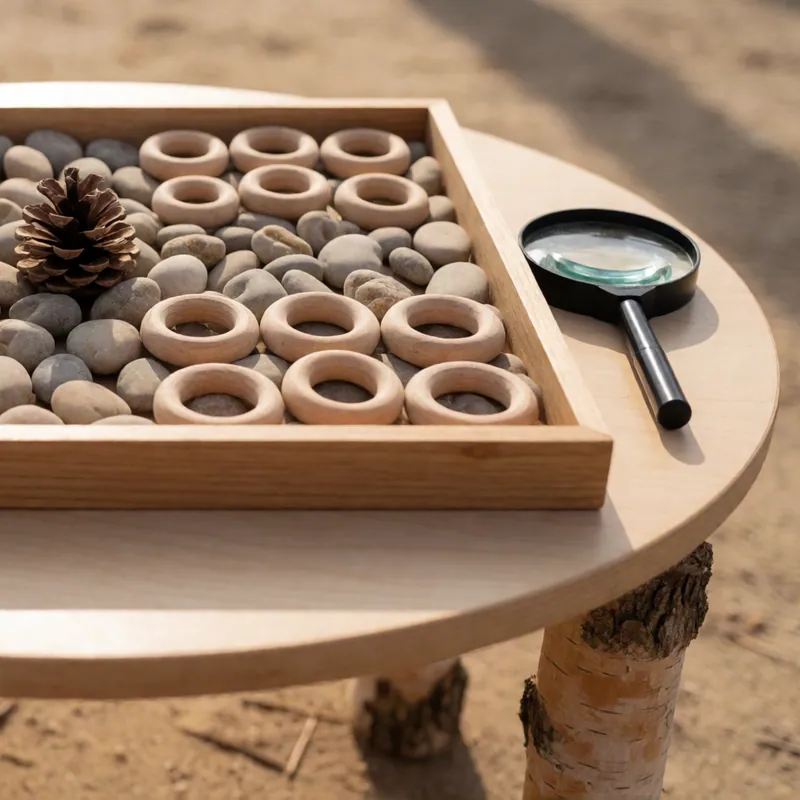
Things to sort, count, compare and order: pebbles, cones, shells, rings, buttons, lengths of ribbon. Sorting is the foundational mathematical act — deciding what makes two things the same — and it occupies two-year-olds almost indefinitely.
Things to fill and empty. Water, sand, rice, jugs, funnels and containers of obviously different shapes. Conservation of volume is not a lesson, it is a conclusion a child reaches after a few hundred pourings, and there is no shortcut.
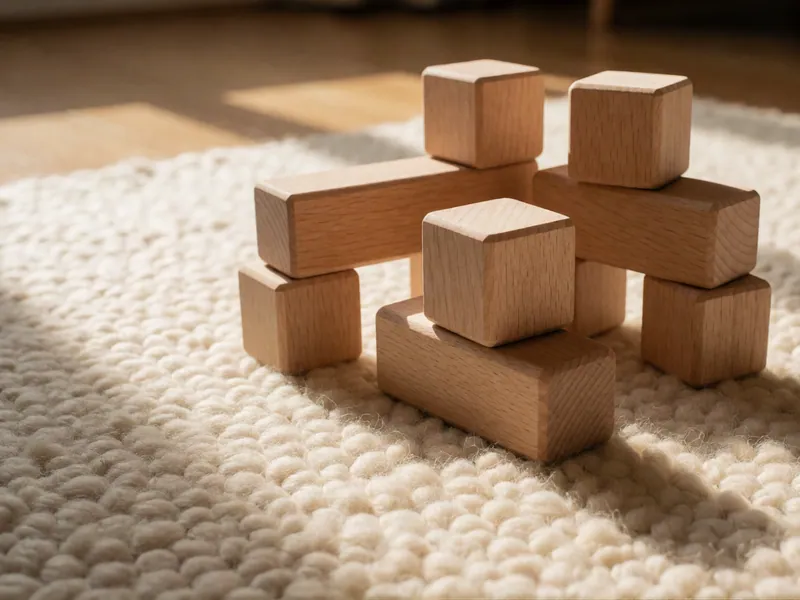
And things to balance and build. Weight, stability, symmetry and the discovery that a tall thing with a narrow base falls over — which is physics arrived at by a two-year-old at some personal cost.
Counting that means something
Counting out loud in the ordinary business of the day: laying out cups, sharing fruit, checking whether everybody has a coat. Counting attached to objects, in a situation where the answer matters.
Rote counting to twenty is a different and much less useful skill, and it is the one most often demonstrated to visitors. A child who can recite the numbers and cannot yet tell you which of two plates has more has the sequence and not the quantity.
So we count things, constantly, and we do not drill the sequence. The sequence follows the meaning rather than the other way round.
Science, which at this age is mostly noticing
What sinks, what melts, what a shadow does at different times of day, where the water goes, what happens to the plants in the yard between March and June. Long observation of ordinary things is genuinely what science is at four.
The trays get changed weekly and what goes on them is decided by what children have actually been doing rather than by a scheme of work. A room that has spent a fortnight obsessed with ramps gets more ramp, not a topic change because it is Tuesday.
Nobody here is going to tell you we run a STEM programme. We put good materials in front of children and watch what they do with them, which is both more honest and, at this age, more effective.
We do not teach reading to four-year-olds. We do not teach reading, worksheets or timed drills to children under five, and we will not start because a family asks. The year before kindergarten is best spent on stamina, independence, language and getting on with other children — managing a coat, a lunch, a queue and a toilet, and asking an adult for help. A four-year-old who can do those things and cannot yet read is ready for school. A four-year-old who can read and cannot do those things is not, and no nursery selling you the first list will tell you that.
Included as standard
What is included
Sorting and comparing materials
Pebbles, cones, shells, rings and buttons. Deciding what makes two things the same is the foundational mathematical act.
Filling and emptying, every day
Water, sand, rice, jugs and funnels. Volume is a conclusion reached after a few hundred pourings.
Balancing and building
Weight, stability and symmetry, discovered at some personal cost by a two-year-old.
Counting attached to real objects
Cups, fruit, coats. Counting in situations where the answer matters.
Trays changed by observation
Weekly, and decided by what children have been doing rather than by a scheme of work.
Long observation of ordinary things
Shadows, plants, ice, puddles. This is what science is at four.
Nothing carrying printed numerals
Quantity before symbol. The numeral is useful once the quantity means something.
No supplement and no STEM branding
It is materials and attention, and calling it a programme would be selling you a word.
When to make an appointment
Signs this is worth an assessment
- You would rather your child understood quantity than recited a sequence.
- You want materials chosen from observation rather than from a term plan.
- You are comfortable with water, sand and rice being a daily event.
- You want the room to follow a fortnight-long obsession rather than change topic on schedule.
- You are sceptical of preschools advertising a STEM curriculum.
- You want somebody who will tell you rote counting is the less useful skill.
Math & science — what it costs
- Built into the materials rather than taught as a lesson. The trays get changed weekly and what is on them is decided by what the children have been doing, not by a scheme of work.Included
Every rate on this site is published in full on the tuition page, including the ones that make us look expensive. Meals, snacks, nappy changing, settling-in sessions and the whole curriculum are inside the weekly fee — there is no premium tier and no outside provider invoicing you separately for a music class. The two charges that are not in the weekly fee are registration, at $75 a year per family rather than per child, and late collection after 6:15pm at $1 a minute, which goes to the two members of staff who stayed. If your child is three or four, read the 3-K page before you read this one.
Questions we are actually asked
Math & science — frequently asked
Do you teach numbers?
We count things — cups, fruit, coats — constantly, in situations where the answer matters. We do not drill the number sequence, because a child who can recite to twenty but cannot tell which plate has more has the sequence without the quantity, and the sequence follows meaning rather than the other way round.
Is there a STEM programme?
No, and we would be selling you a word if we said otherwise. What there is: good open-ended materials, changed weekly based on what children are actually doing, and adults who notice and extend. At four that is both more honest and more effective than a branded scheme.
Why is there no number line on the wall?
Because a numeral is only useful once the quantity behind it means something, and a wall display does not create that. The work happens with objects in hands. It is also the case that this nursery keeps its walls fairly bare on purpose.
What does science look like at this age?
Noticing, mostly, over long periods. What sinks, what melts, what a shadow does at different times of day, what happens to the plants in the yard between March and June. Sustained attention to ordinary things is genuinely what the discipline is at four.
Does my child need to know numbers before kindergarten?
Far less than the marketing suggests. What matters more is the practical list on our kindergarten readiness page — managing a day, asking for help, lasting until three. Quantity sense will come from a year of filling containers more reliably than from drilling.
Related programmes
Families who read this also read
Play-based learning
The approach with the best evidence behind it for children under five, and the one that photographs worst. We chose it anyway.
Included
Early literacy
Talking, singing, rhyming and being read to. Not worksheets, and not flashcards, and we will explain why at the tour.
Included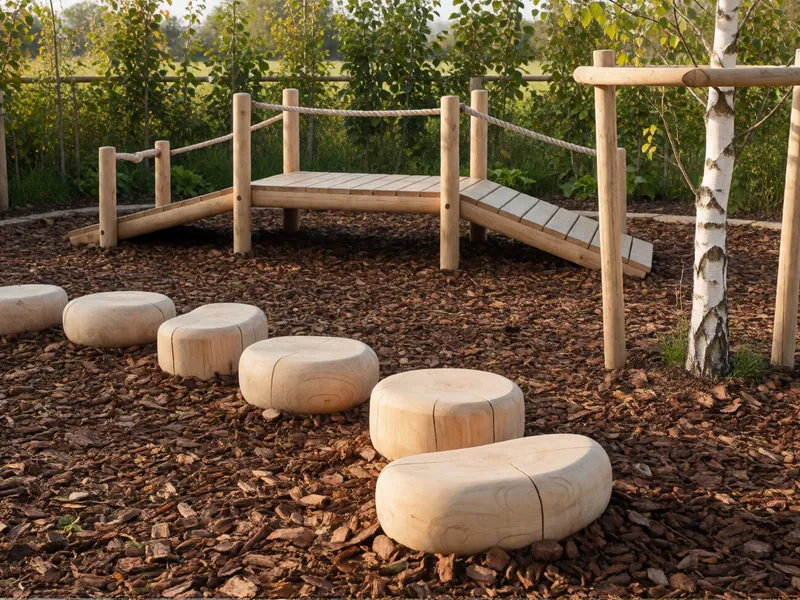
Outdoor play
Twice a day in almost all weather, in our own enclosed yard. The published exceptions are heat, ice, thunder and air quality.
Included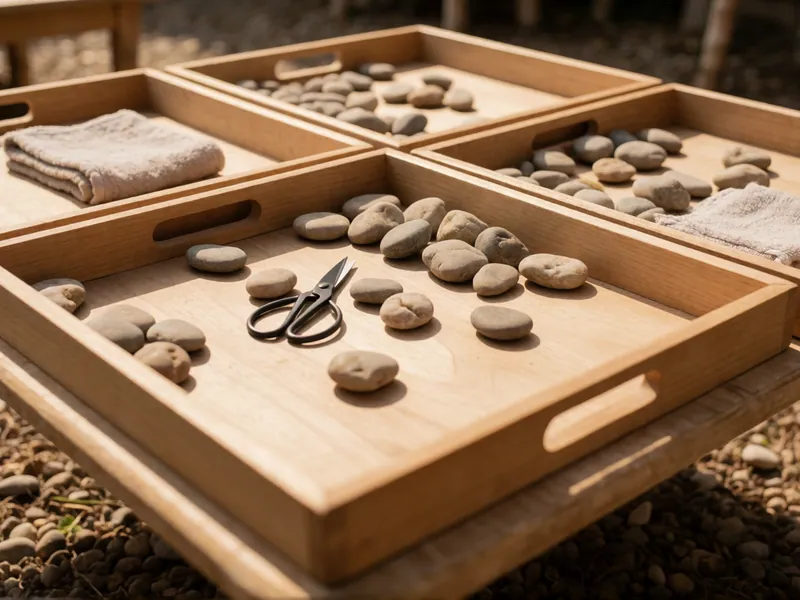
Kindergarten readiness
Managing a coat, a lunch, a toilet, a queue and six hours away from home. Reading is not on this list and does not need to be.
IncludedTuesday and Thursday mornings, while the children are here
Come and see the room
A tour here happens during a session, in the room your child would actually be in, at the time of day they would be in it. You meet the person who leads that room rather than only the director, and you see the noise and the mess that are genuinely there. It takes an hour. If your child is three or four we will ask whether you have applied for free 3-K or Pre-K for All before we quote you a rate, because a good many families should not be paying us at all.